
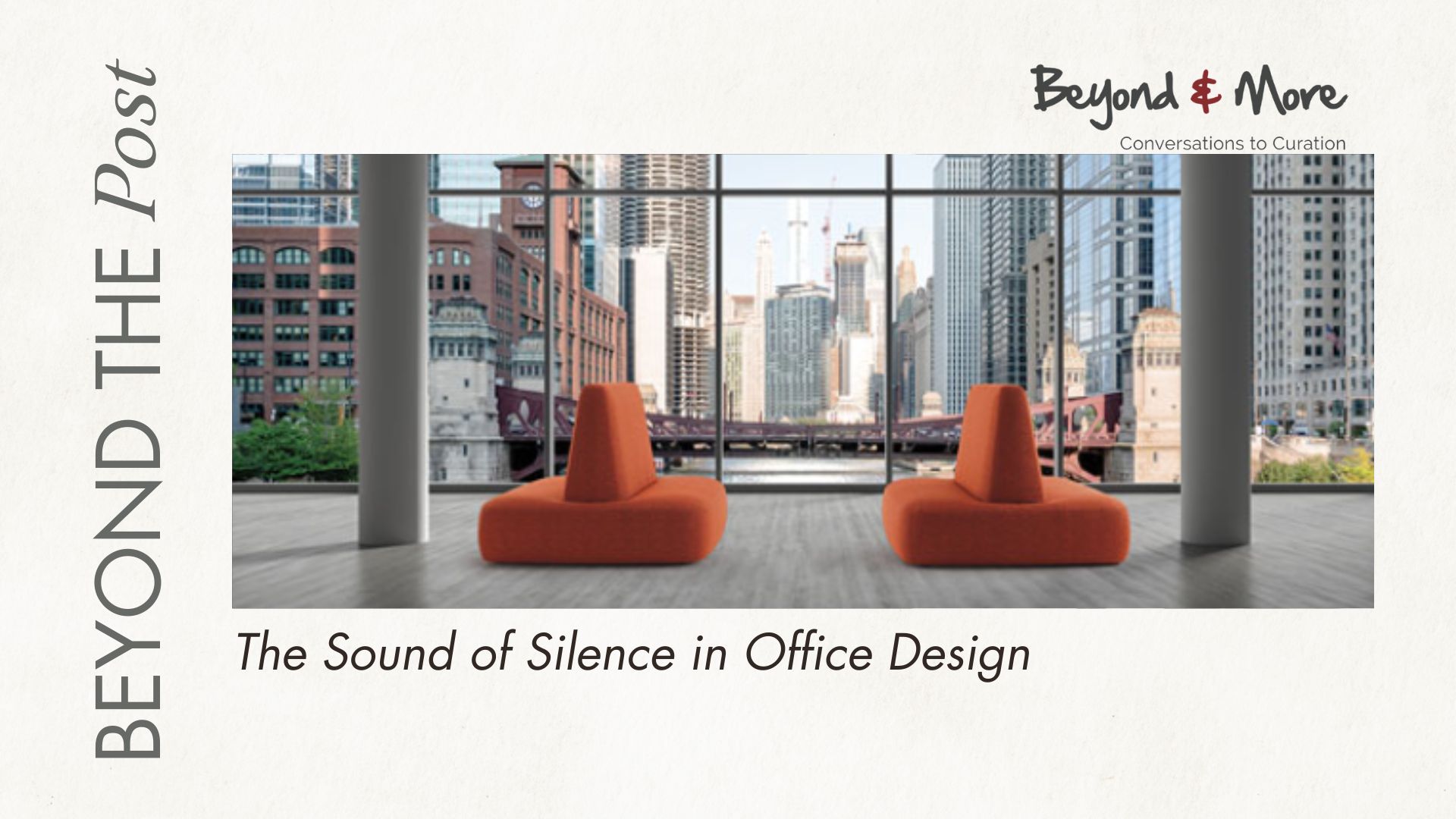
Every designer knows the frustration: a space that looks flawless on paper, but in practice, reverberation turns collaboration into chaos.
The open plan meant for flow ends up amplifying noise. Townhalls blur. Presentations lose clarity. Even simple meetings feel effortful.
Acoustics are no longer an afterthought; they’re as integral to workplace design as light, circulation, or materiality. The right absorption balances transparency with privacy. The right surfaces reduce reverb without compromising aesthetics. When you design for acoustics, you’re not muting life… you’re tuning it.
Today, more and more brands are showing us that acoustics can be as sculptural and sensorial as any visual or tactile feature. Think sound-absorbing seating, handcrafted wood panelling, living moss walls, precision-engineered panels.
So, what does the sound of intelligent design really look like in an office?

1.When Spaces Learned To Listen For The First Time
2.The Materials of Quiet
3.Sculpting Silence: Acoustic Icons in the Workplace
4.Curating Atmospheres With Beyond & More
When Spaces Learned To Listen For The First Time
The idea of shaping sound in spaces isn’t new. Architecture and design have always been as much about sound as it is about sight.
In ancient Greece, amphitheatres were carved into hillsides so a whisper on stage could carry across thousands of stone seats. The geometry was no accident; it was design tuned to the human ear.
Medieval cathedrals did the same in a different register. Vaulted ceilings, carved choir stalls, and timber panels were not only symbols of devotion. They softened resonance, channeled voices, and turned cavernous interiors into vessels for clarity.
Even modernism understood this. Le Corbusier’s Philips Pavilion at the 1958 World’s Fair was as much an acoustic experiment as it was a visual one, its curved forms designed to bend and orchestrate sound.
What has changed today is scale and intention. The same principles—controlling reverberation, enhancing clarity, creating calm—are being applied to open-plan workplaces where noise has become one of the top employee complaints worldwide.
“Acoustic solutions aren’t hidden behind walls anymore. They’re celebrated in forms that are sculptural, colourful, and tactile, turning silence into a visible design language.”
Juhi Sakhuja, Head Of Curation, Beyond & More
The Materials of Quiet
Silence in a space doesn’t come from one product. It’s the layering of materials, densities, and forms that work together to tune sound the way architects and designers tune light:
1. ABSORBERS
How They Work: Porous materials like mineral wool, fibreglass, acoustic foams or advanced multi-density fibres that soak up sound waves instead of letting it bounce back, reducing reverberation time.
In an open-plan office, they’re often tucked inside wall panels, ceilings, or wrapped in
fabric to double as design accents. Absorbers are the difference between a hum of activity and an exhausting echo chamber.
2. DIFFUSERS
How They Work: Slatted wood, perforated panels, or sculptural baffles scatter sound in multiple directions, breaking up echoes without silencing the room.
In meeting rooms and townhalls, diffusers preserve energy while ensuring every voice carries clearly. They stop words from dissolving into blur.
3. REFLECTORS & ISOLATORS
How They Work: Dense materials like gypsum board, brick partitions, acoustic glazing, and others add mass so sound stays in or out.
They turn glass-lined boardrooms into real rooms of privacy. Without them, confidential conversations leak, and focus breaks down.
4. HYBRIDS
How They Work: Acoustic fabrics, curtains, blinds, lighting fixtures, even wall art double as absorbers or diffusers while acting as primary finishes.
These solutions allow designers to meet acoustic goals without “adding panels.” Quiet becomes part of the architecture, not a bolt-on fix.
The magic isn’t in a single material. It’s in balance: absorbers calm reverberation, diffusers spread sound evenly, isolators frame boundaries, and hybrids slip acoustics into everyday finishes. Together, they shape workplaces where townhalls stay intelligible, private calls stay private, and the energy of an open plan doesn’t tip into fatigue.
“Interior designers often feel limited in expressing creativity with current acoustic products. Many simply haven’t been exposed to the newer, design-friendly solutions that could open up their options.”
Sanjay Pareek, Co-Founder, Beyond & More
Sculpting Silence: Acoustic Icons in the Workplace
Great acoustic solutions don’t have to choose between performance and design. Many brands are proving that functionality, aesthetics, and wellbeing can exist in the same space.
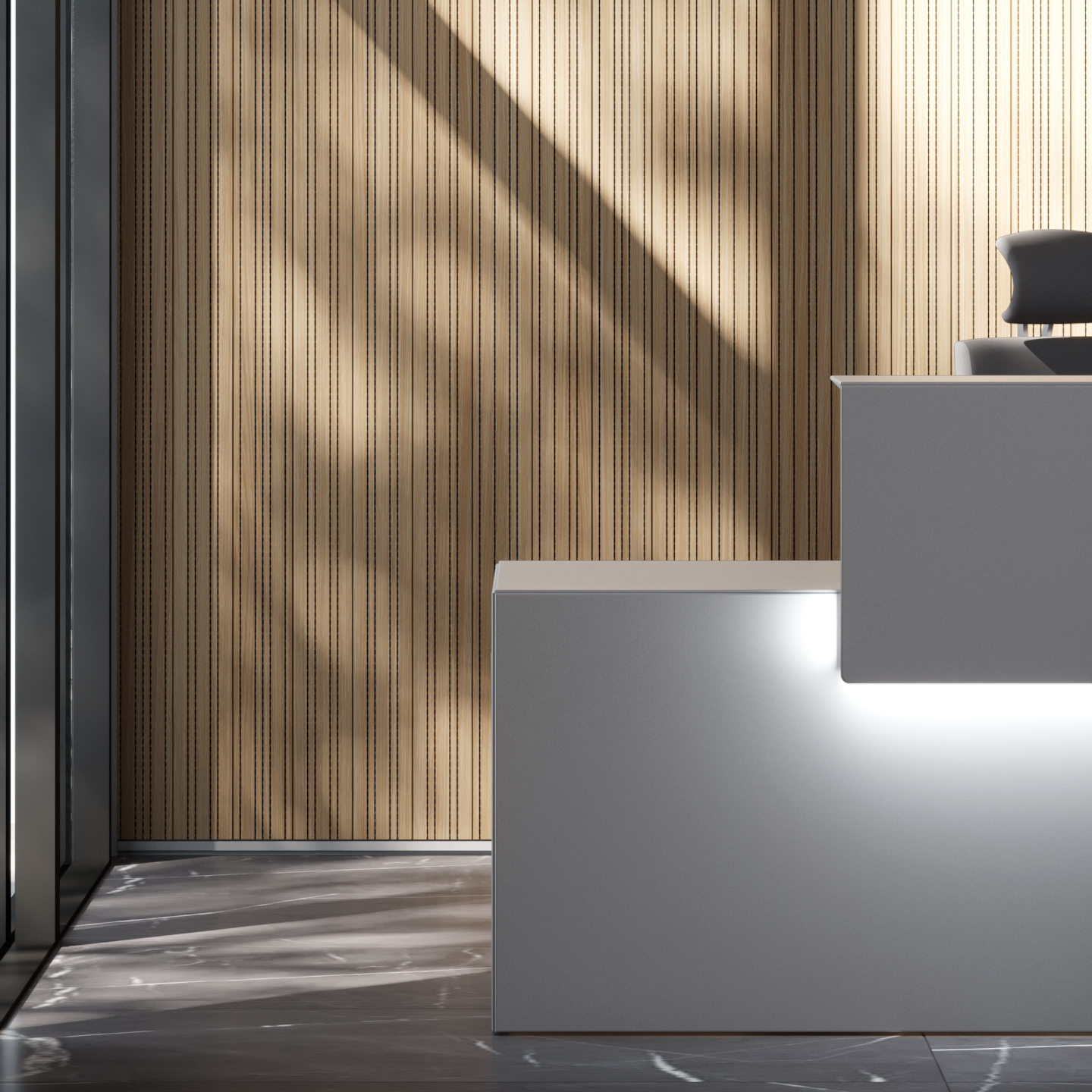
1. WHISPERS ON THE WALL
Walls have always divided space. Today, they also shape silence.
Take Fantoni’s 4Akustik panels: engineered from high-density MDF (800+ kg/m³) and precision-milled perforations, the sound-absorbent system is for use on walls and ceilings. they absorb a broad range of frequencies, cutting reverberation and improving clarity in open layouts.
Beyond performance, they meet the strictest fire and indoor air quality standards and even help projects earn LEED® credits (a rare case where acoustics, safety, and sustainability align).
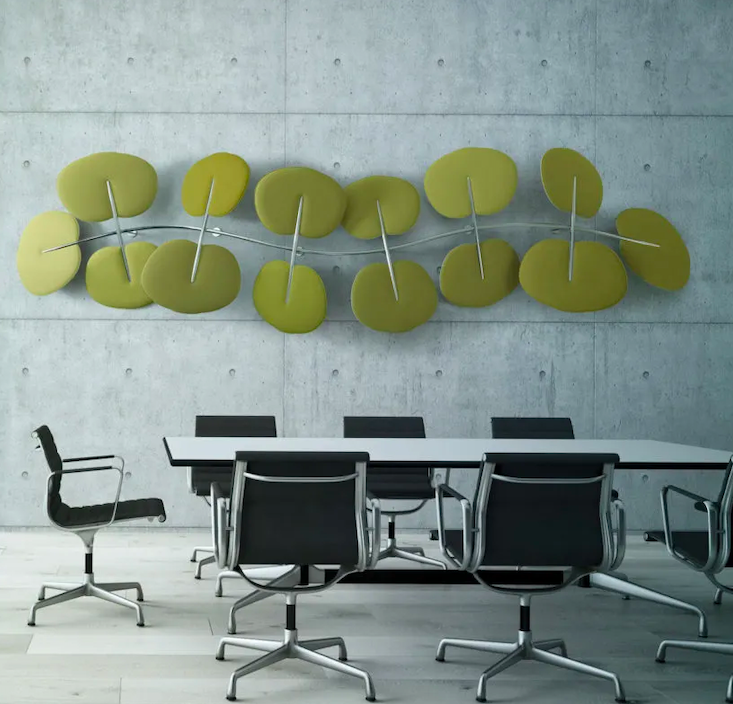
2. SCULPTURES OF SILENCE
Then there’s Caimi’s Botanica collection: a system of petal-like forms upholstered in patented Snowsound multi-density fibre. Unlike standard PET panels that trap only limited frequencies, these absorb across the spectrum. The result is walls that feel alive, softening echoes while creating sculptural, organic installations that bring rhythm as much as relief.
Together, these innovations prove a wall can do more than stand still. It can carry science in its core and poetry on its surface.
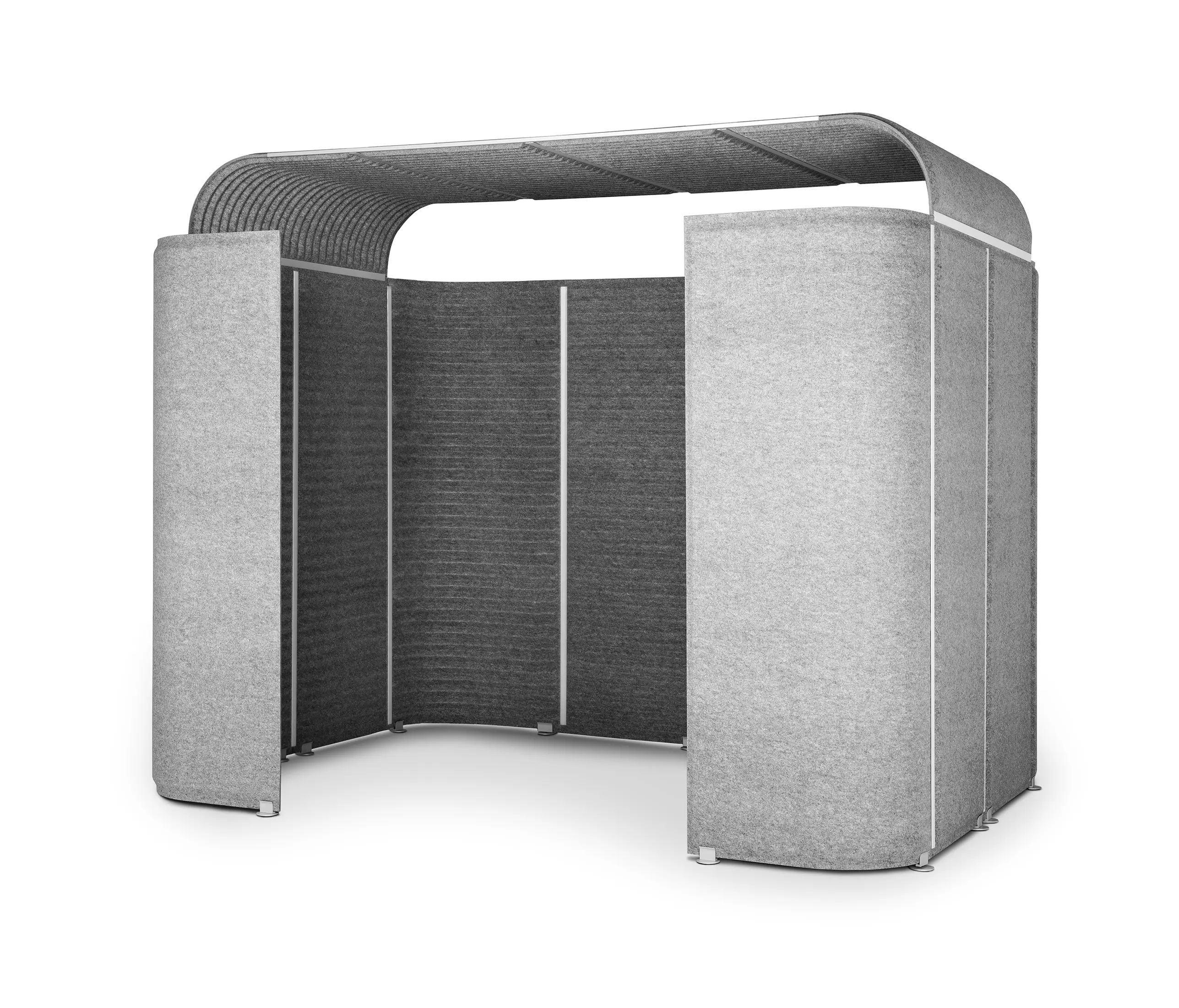
3. ROOMS WITHIN ROOMS
Noise control in open-plan offices doesn’t always come from panels on walls or ceilings. Sometimes, it’s built into the furniture itself. Noti’s SoundRoom (designed by Tomek Rygalik) is less a collection of pieces and more a systemic acoustic landscape.
Using modular felt-wrapped panels with a honeycomb cardboard core, it integrates the same principles you’d find in recording studios: absorbing sound, diffusing reflections, and shaping the flow of conversation.
What makes it powerful is configurability. With just five structural elements, SoundRoom creates armchairs, sofas, desks, partitions, and even phone booths. The result is a set of lightweight, mobile “oasis” that can carve micro-environments inside a larger open plan.
4. PRIVACY ZONES FOR FOCUS
Silence doesn’t always mean isolation; sometimes it’s about carving out silence within shared space.
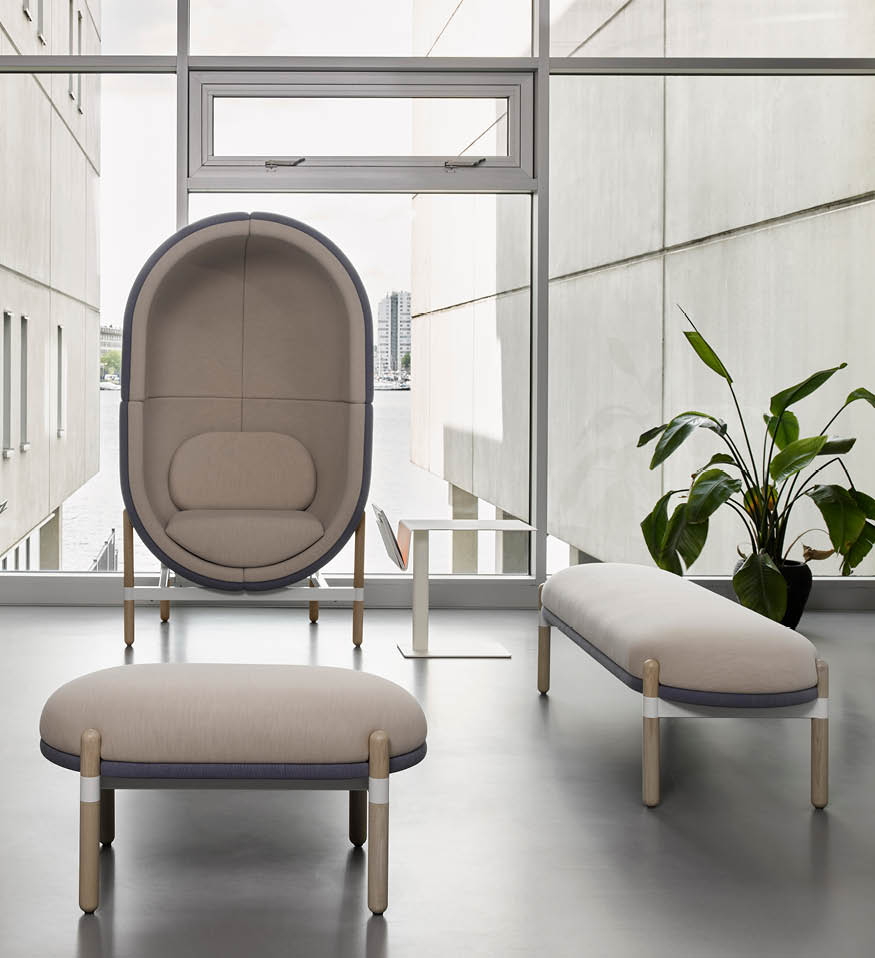
Casala’s Capsule is engineered with high-backed, upholstered shells that cocoon the sitter. Its curved form and dense acoustic padding don’t just block visual distraction, they significantly dampen ambient sound, creating a bubble of privacy in the middle of an open floor.
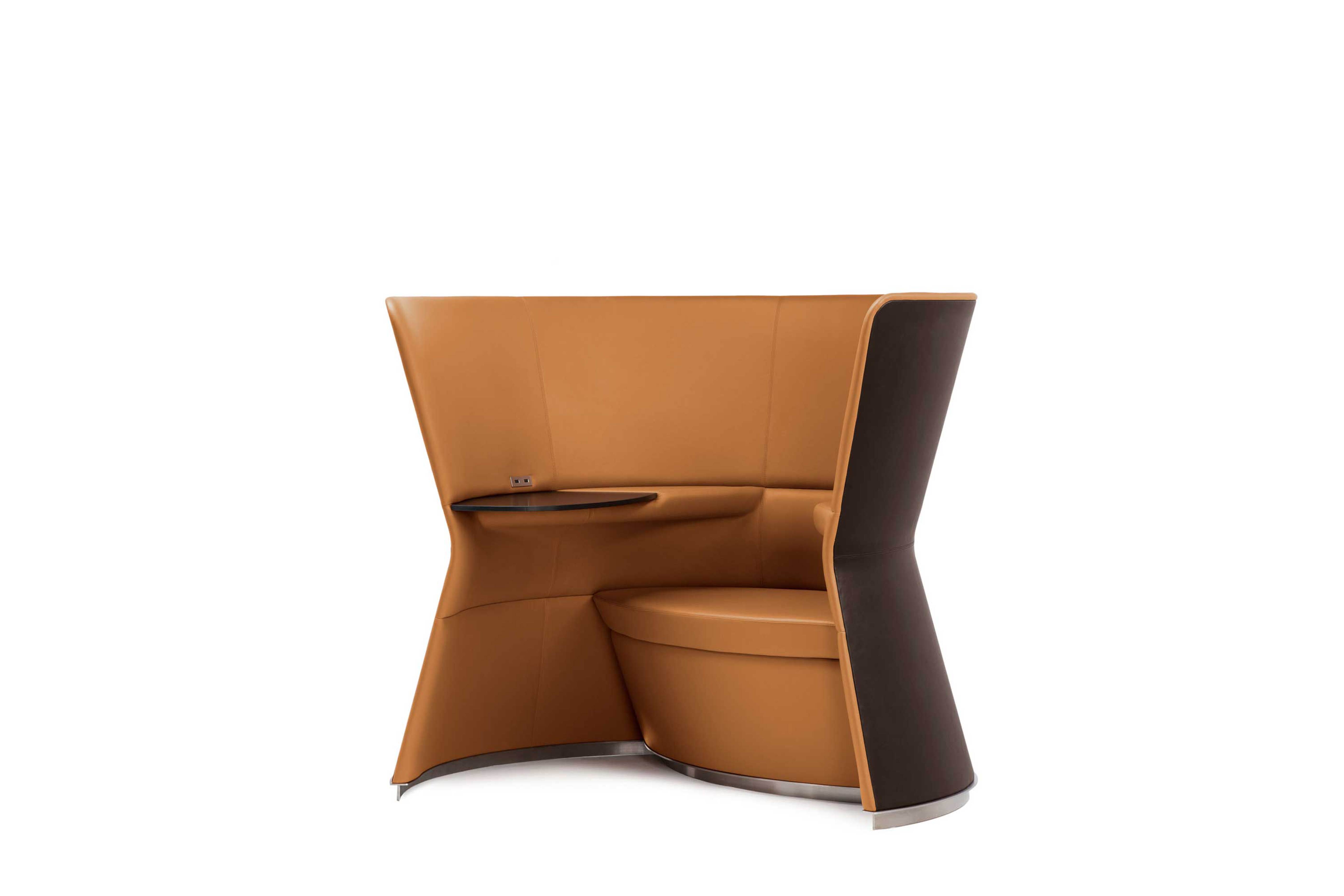
For executive environments, Poltrona Frau’s Cove translates acoustic comfort into a language of refinement. Its upright proportions and fine leather detailing make it suitable for boardrooms or lounges, where posture, presence, and discretion matter as much as focus.
GREEN SOUNDSCAPES
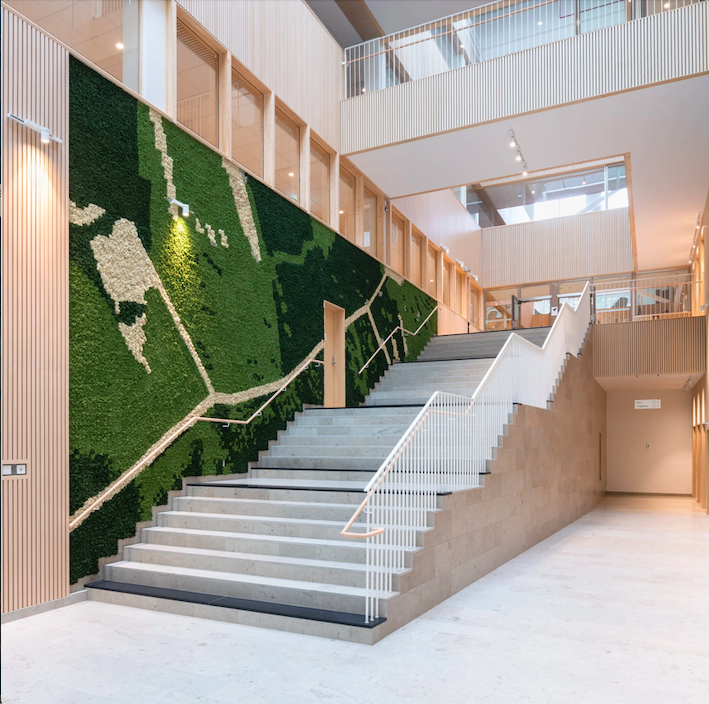
Nature itself becomes an acoustic partner with Nordgröna’s moss walls and living
panels. They act as natural sound absorbers, softening the hum of open offices.
The texture of preserved Scandanavian moss balances noise levels , while the greenery refereshes the air and the mood of the room. By combining biophilic design with acoustic performance, these panels create workspaces that feel calmer, healthier, and more connected to nature.
Curating Atmospheres With Beyond & More
In a world of constant notifications, buzzing devices, and wide-open office layouts, silence has become a rare luxury. The truth is, workplaces were never designed to be this noisy. And yet, the hum of conversations, footsteps, and digital alerts now make up the backdrop of our daily lives.
The best acoustic design doesn’t aim to erase this sound completely. It orchestrates. It softens. It balances. It creates rhythms that feel natural to the ear. In doing so, it transforms sound into something harmonious.
At Beyond & More, we see silence not as absence, but as presence. It’s the subtle layer that allows everything else—ideas, connections, creativity—to come through more clearly. The right materials and forms can turn an office into a place that feels grounded, focused, even restorative.