
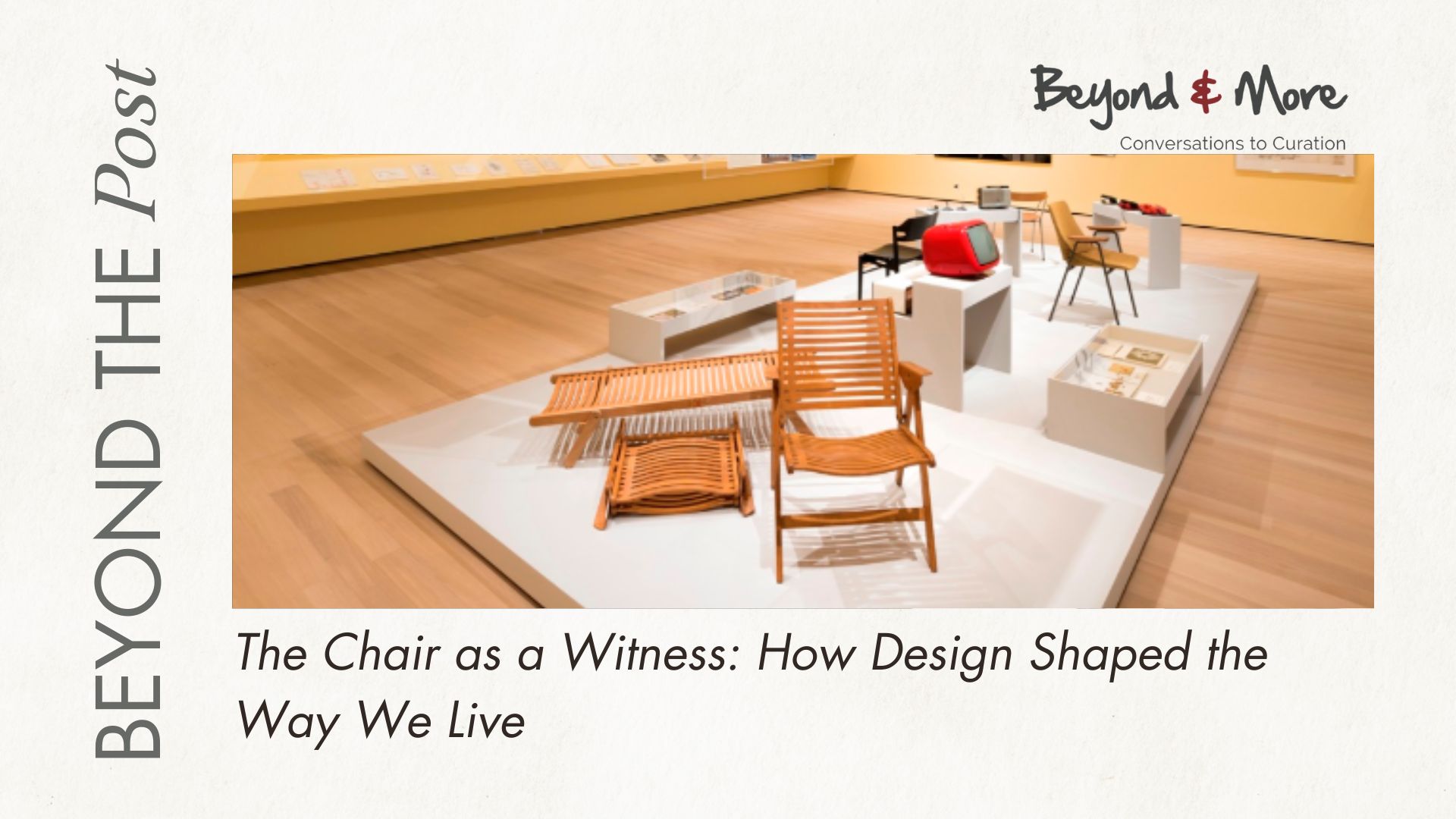
What if you could trace the evolution of modern life… by simply looking at a chair?
From salons to studios, cigar lounges to co-working hubs, the chair has always mirrored the rhythms of the people sitting in it.
In fact, the spaces we create, and the furniture we choose to fill them, say more about us than we realise. A chair isn’t just a seat to fill. It tells you how formal or relaxed a room is meant to be. How long you’re invited to stay. Whether conversation is expected, or solitude is granted.
Furniture design responds to our life and style… sometimes, even suggests a different way. And we, often unknowingly, adapt.
In this edition, we explore chairs not as objects, but as markers of movement. Because to understand how people lived—their habits, values, pleasures, even politics—all you have to do is study how they sat.
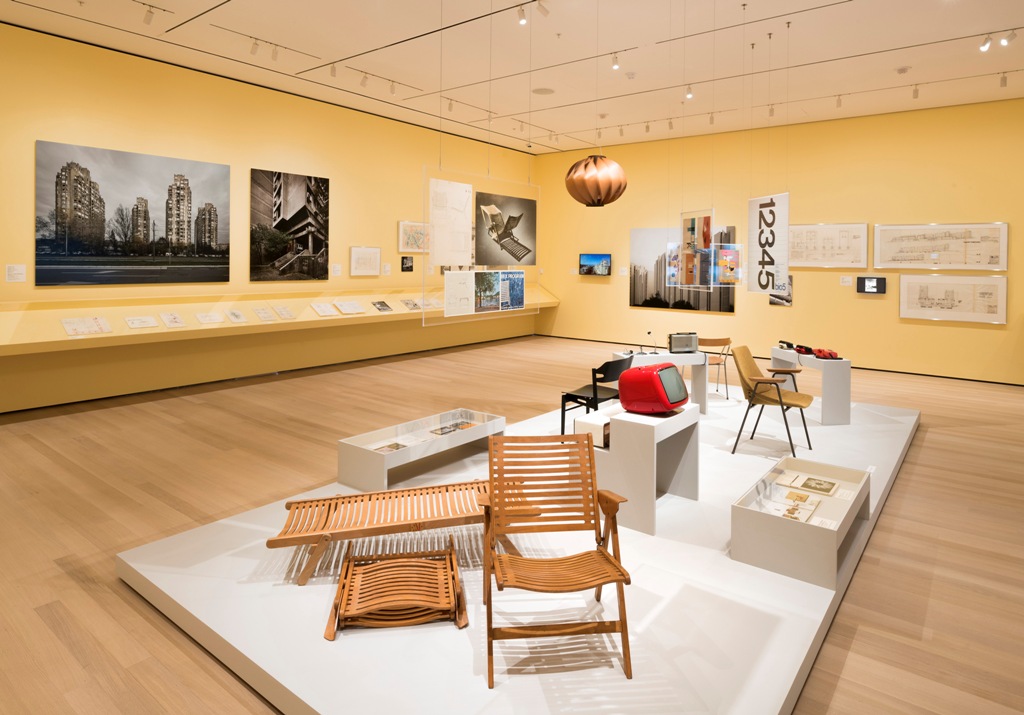
1. CHAIRS THAT DEFINED SITTING & LIVING
2. HOW SEATS HAVE SHAPED US
3. THE CHAIRS OF TODAY
4. THE SEAT OF CHANGE
CHAIRS THAT DEFINED SITTING & LIVING
Over the years, the shape of a seat has mirrored the structure of society itself.
The throne. The rocking chair. The lounge. The monobloc.
- 1800s | The Era of Craft & Class
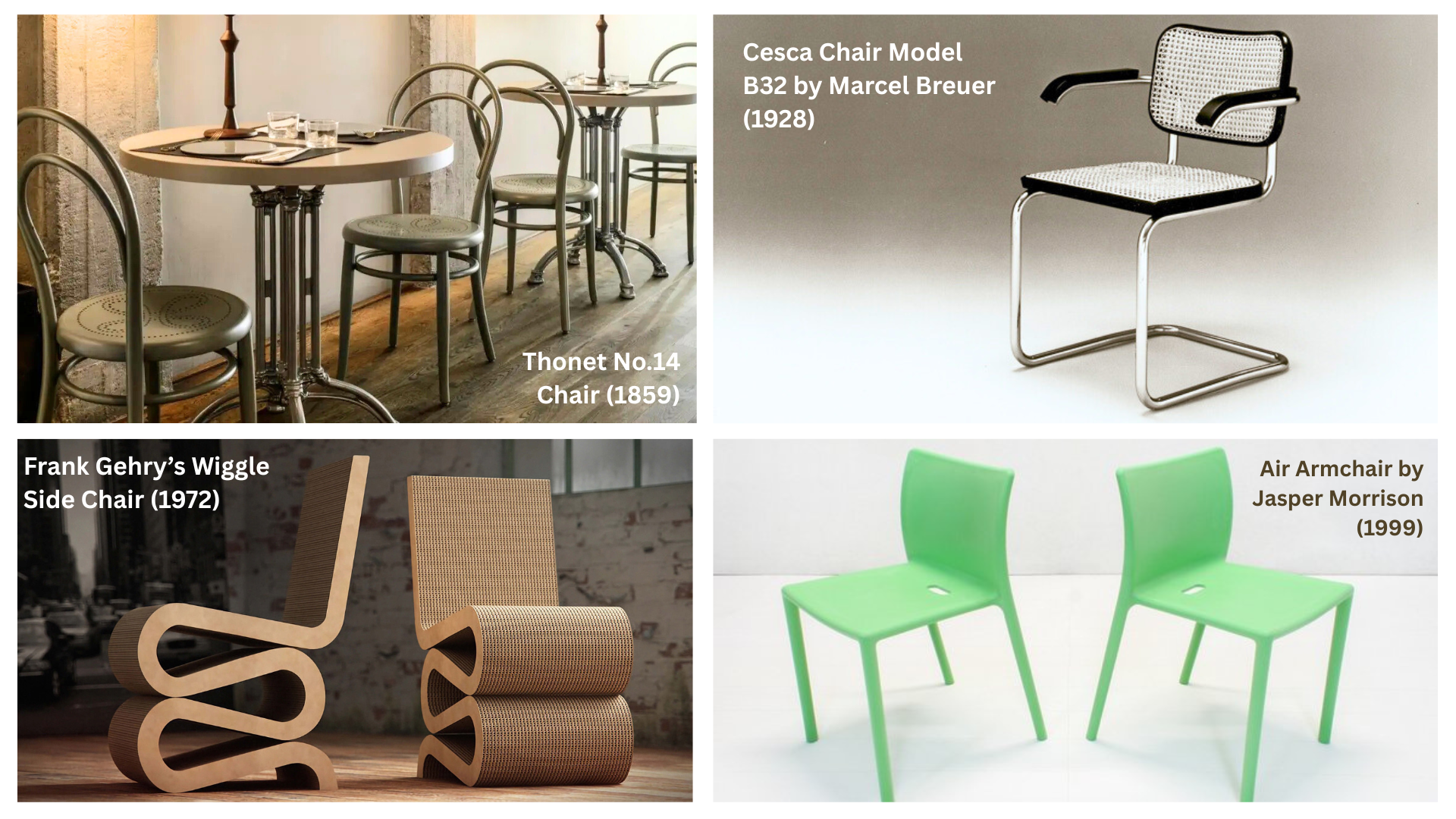
Defining Chair: Thonet No.14 Chair (1859); Brand: Gebrüder Thonet
Mass-produced bentwood, yet elegant. Suddenly, the café becomes the social theatre of the growing middle class. Design becomes democratic, although just a little. - 1919–1933 | Bauhaus & the Birth of Industrial Design
Defining Chair: Cesca Chair Model B32 by Marcel Breuer (1928); Brand: Knoll
This chair captured the Bauhaus belief that beauty and utility should live side by side. A tubular steel frame with a woven cane seat and back, it was one of the first chairs to combine modern materials with traditional craft. - 1930s–40s | The Machine Age Mindset
Defining Chair: Tugendhat Chair by Mies van der Rohe (1929); Brand: Knoll
Minimalism becomes the language of power. Clarity and order move from buildings to bodies with furniture designed by an iconic architect. - 1950s | Domestic Modernity
Defining Chair: Eames Lounger (1956); Brands: Herman Miller (US), Vitra (EU)
A warm embrace in moulded plywood. Leisure becomes aspirational. Mid-century homes want comfort with taste. - 1960s–80s | Pop, Protest & Provocation
Defining Chair: Frank Gehry’s Wiggle Side Chair; Brand: Vitra
Cardboard as structure. Form as rebellion. Chairs become sculptures, and their function no longer needs to behave which opens the floodgates of form innovation. - 1990s–2000s | The Global Home
Defining Chair: Air Armchair by Jasper Morrison (1999); Brand: Magis
One-piece, lightweight, stackable. This chair was designed to go anywhere, and it did.
As homes went global and minimalism found mass appeal, the Air Chair embraced a softer kind of utility. It didn’t shout. It just worked, everywhere.
HOW SEATS HAVE SHAPED US
Chairs have never just been objects of rest. They are tools of posture, presence, and power. Quietly, over centuries, the chair has taught us how to sit, but also how to think, feel, and relate to space.
Let’s look at how chairs have always shaped the human experience:
- Posture As Culture: The way we sit is never neutral. The high back of a throne, the forward tilt of a work stool, the recline of a lounge—each reflects a mindset. Chairs encode status, hierarchy, and evolving ideas of comfort, aspiration, and mood.
- The Ritual Of Sitting: From the café chair to the boardroom swivel, how we gather around a table has shifted with time. Chairs choreograph social interaction by taking cues from when we lean in, when we turn away, and when we take space or share it.
- Intimacy With Design: No object sits closer to the body than a chair. Unlike a building or a lamp, it engages your frame, your muscles, your stillness. Great chairs are not just seen, they’re felt. They become moulds of memory.
- Form As Feeling: A curved backrest can signal an invitation. A rigid one, authority. Materials matter, too. Cushioned upholstery softens conversation, while cold metal sharpens focus.
“I love how chairs carry stories of eras.
The quiet confidence of a Corbusier, the generous ease of an Eames, or the fluid irreverence of a Gehry… you can actually see and feel the culture shift beneath you when you sit.”
Sanjay Pareek, Co-Founder, Beyond & More
THE CHAIRS OF TODAY
If past decades taught us how we sit, today’s chairs are asking ‘why’ we sit, and how it makes us ‘feel‘.
Designers aren’t just shaping furniture anymore. They’re shaping mood, energy, movement, and mental clarity. The chair has moved beyond material and silhouette into the realm of behaviour. From homes to hybrid offices, the most thoughtful seating today blends intuitive ergonomics with aesthetic emotion. It adapts to motion, supports pause, and signals purpose.
Here are five shifts reshaping the way we sit now, and the pieces leading the way:
ERGONOMIC INTELLIGENCE
Chairs that adapt to your spine, not the other way around.
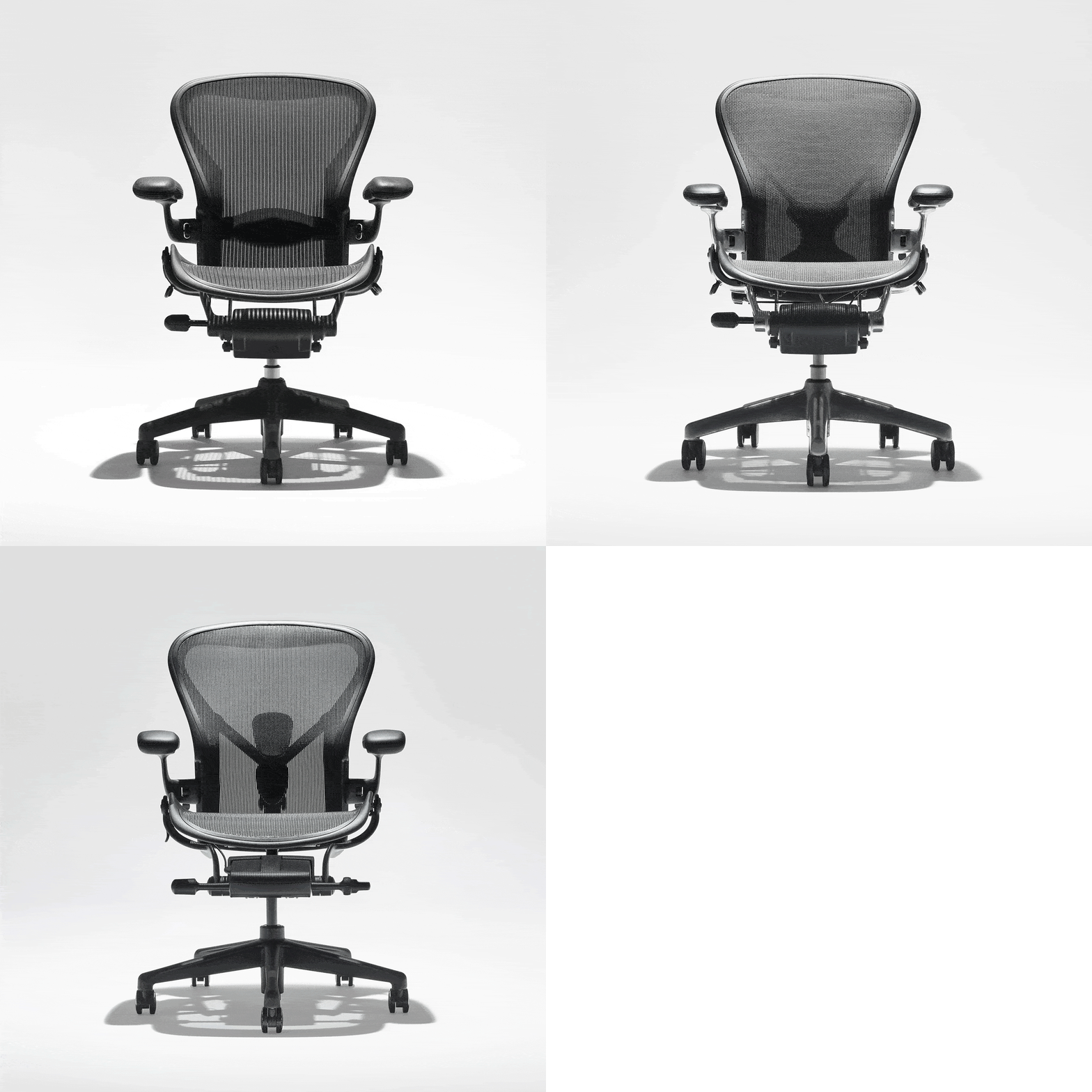
Defining Chair: Aeron by Herman Miller redefined the office chair when it launched in 1994, and it’s still a benchmark. With its breathable Pellicle mesh, pressure-distributing tilt, and responsive back support, it was one of the first chairs designed around the body in motion, not at rest.
EMOTIONAL & SENSORY DESIGN
Furniture is no longer just physical, it’s emotional. Designers are tuning into how chairs can regulate mood, reduce anxiety, and support neurodiverse needs.
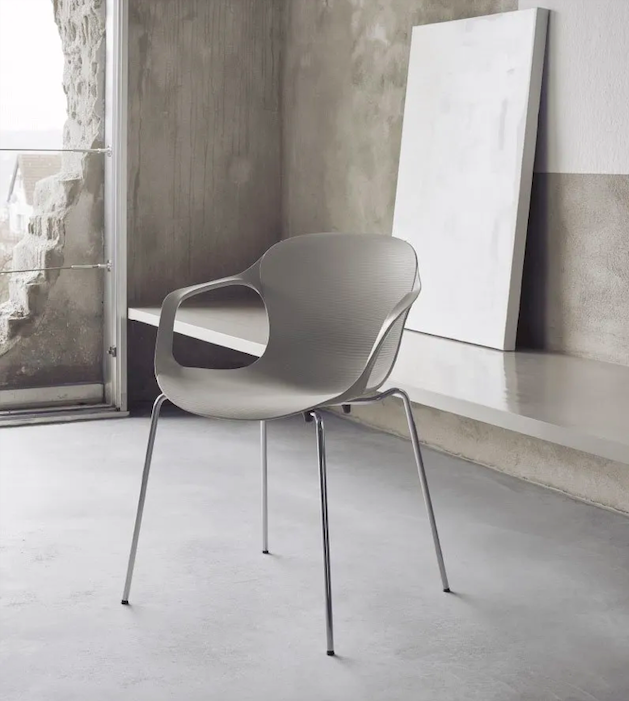
Defining Chair: Built around the three ways people naturally sit—Normal, Active, and Passive—the N.A.P. Chair by Fritz Hansen supports micro-movements and gentle rocking. Its flowing form and tactile curves are designed not just for posture, but for presence
AESTHETICS OF SOFT POWER
Soft power, quite literally, from every angle. Comfort and style isn’t a luxury; it’s a baseline.
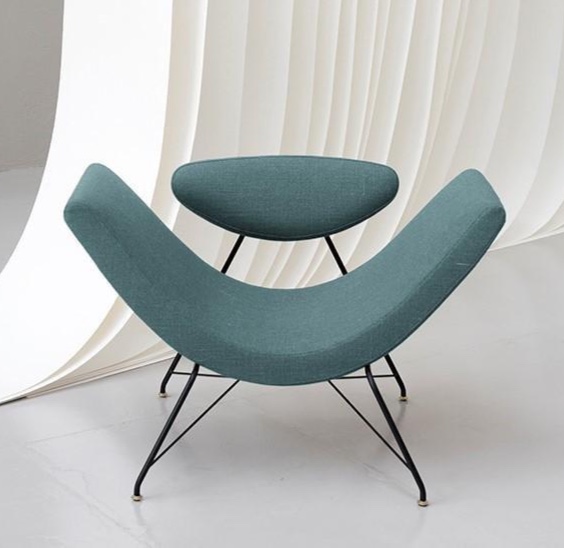
Defining Chair: With its cocoon-like seat and fluid silhouette, Tacchini’s Reversível Chair adapts to how you want to sit: upright, sideways, or sunk deep into thought.
Originally designed in 1955, reissued by Tacchini, and still a quiet power move in 2025.
ECO-CONSCIOUS CIRCULAR DESIGN
Design is moving towards responsibility, not just aesthetics. Seating is now made using purpose-driven materials.
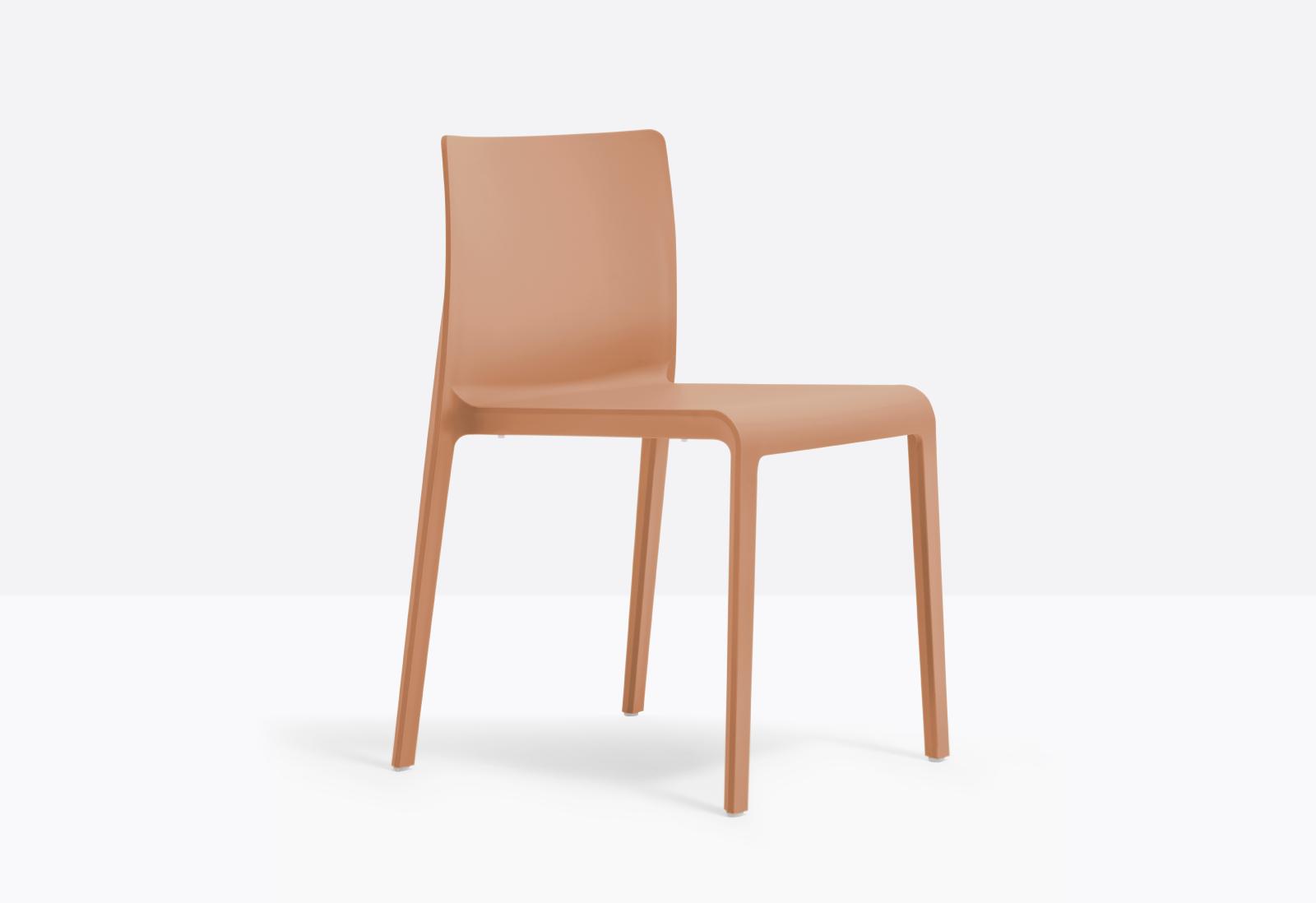
Defining Chair: Made of 60% recycled polypropylene from post-industrial waste, the Volt 670RM by Pedrali fits right into hospitality spaces, home work zones, corporate offices, and even the outdoors. Ergonomic in shape, spacious in proportions, and minimal in gesture—Volt finds elegance in restraint, and impact in eco-conscious material.
WELLNESS AS WORTH
Posture-aware, breathable, mindful. Chairs are now designed for both the body and the brain.
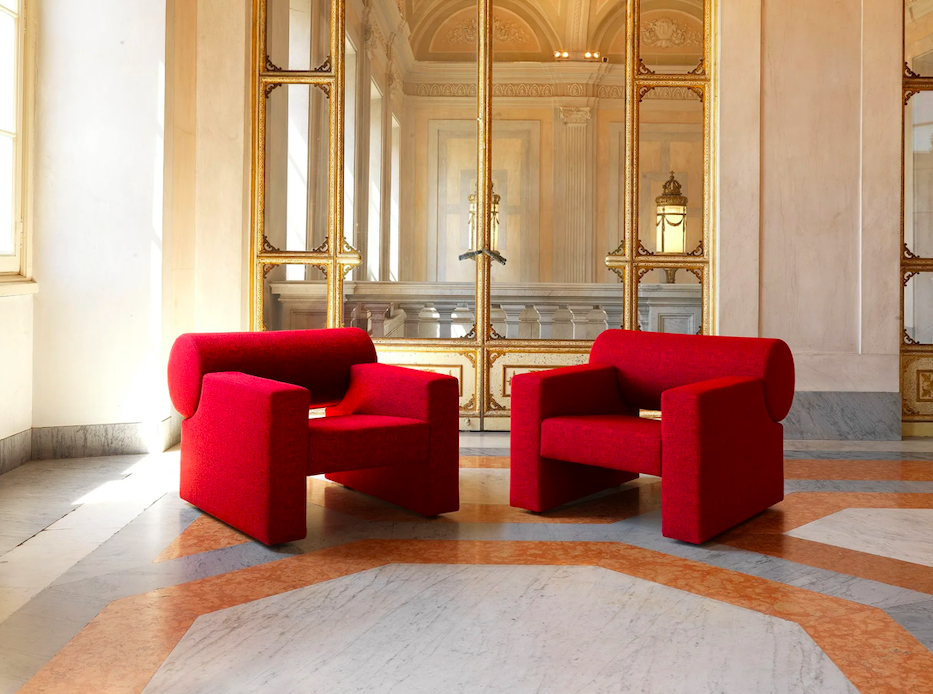
Defining Chair: The Cilindro by Caimi Brevetti uses padding and the external covering made from SNOWSOUND FIBER material to guarantee higher acoustic wellbeing.
“Between 2020 and 2025, the chair has gone from accessory to priority. People are investing in it the way they would a mattress or a piece of art, willing to import the perfect seat for their spine, their space, their state of mind. It’s a quiet but certain shift in what we value in our homes and offices.”
Juhi Sakhuja, Head Of Curation, Beyond & More
THE SEAT OF CHANGE
A well-designed chair doesn’t just hold your body: It holds the weight of intention.
Of a space. A mood. A moment in time.
At Beyond & More, we curate chairs to sync with the energy of a room, the people it serves, and the work it hopes to inspire. Whether you’re furnishing an art gallery or a boardroom, a living room or a writer’s corner, the right chair will do more than sit well. It will say something.
Looking for that one piece that fits just right?