

In the 21st century, noise has become the default soundtrack of our cities. Walk through any Indian street and you’ll hear life at full volume. The steady roar of traffic (often between 75-85 dB), the 100 dB bursts of festivals, and even everyday conversations (around 70-75 dB) form a constant background hum.
Sound, for us, is community, celebration, emotion.

Over time, our auditory system has adapted to this chaos, a phenomenon known as “auditory habituation“.
We’ve become impervious to noise, accepting it as a sign of activity, energy, even life itself. For example, the World Health Organisation (WHO) recommends keeping continuous exposure below 55 dB. Yet, few urban Indian environments ever drop that low.
Prolonged exposure beyond this threshold actually leads to stress, irritability, and loss of concentration, even if we no longer consciously register the noise.
IN THIS ISSUE:
1.The Sound Of Modern India
2.Why Hard Surfaces Create Harsh Soundscapes
3.Caimi’s Snowsound Technology: Engineering for Real Noise
4.Designing By Decibels: What Different Spaces Actually Need
5.Acoustic Solutions That Don’t Compromise Design
THE SOUND OF MODERN INDIA
Sound and noise are deeply cultural in our country—expressive, communal, and omnipresent.
In fact, loudness often signifies celebration, assertion, and belonging. Our festivals, weddings, processions, and markets are acoustically exuberant, reaching 90 dB-110 dB without pause. Even our social interactions, from animated discussions in offices to conversations in cafés or homes, tend to be more vocal and energetic than in many other parts of the world.
We have a high acoustic baseline to begin with; it’s the result of collective desensitisation and remarkable tolerance for noise built over many years. And even though we don’t notice how draining these environments actually are, our physiology hasn’t evolved to thrive in such loudness; our bodies still perceive it as “stress”.
This is where acoustic design becomes not just a technical discipline, but a wellness imperative, helping us restore balance in spaces that our culture has taught us to overlook.
Because good acoustic design doesn’t mean silence, it means balance. Where voices carry clearly, background noise sits comfortably, and the mind doesn’t strain to process every reverberation.
RECLAIMING QUIET AS A DESIGN CHOICE
Modern Indian architecture celebrates openness and transparency. Glass facades, metal ceilings, marble floors, concrete walls—materials chosen for their visual serenity. But acoustically, they’re punishing.
Hard surfaces reflect sound energy instead of absorbing it, creating long reverberation times (RT60) where voices overlap, machinery hums louder, you can’t hear your dinner company, and mental fatigue and irritation builds unnoticed.
Even beautifully designed interiors can feel exhausting when acoustic planning is absent.
“Interior designers often feel limited by existing acoustic products. Many simply haven’t been exposed to design-friendly solutions that could expand their creative options while solving real acoustic problems.”
Sanjay Pareek, Co-Founder, Beyond & More
This problem intensifies in:
-
Restaurants and cafés: Where overlapping conversations, clattering dishes, and music create a cacophony of noise
-
Open-plan offices: Where employee density, phone calls, meeting room huddles, and tech equipment produce sustained 70-80 dB levels
-
Retail environments: Where high footfall, transactions, ambient music, and customer service compete for acoustic space
-
Homes: Where minimalist design with hard flooring and bare walls reflects every sound, sometimes creating a sharp reverb
No matter how flawless the visual design, if the space sounds exhausting, it fails.
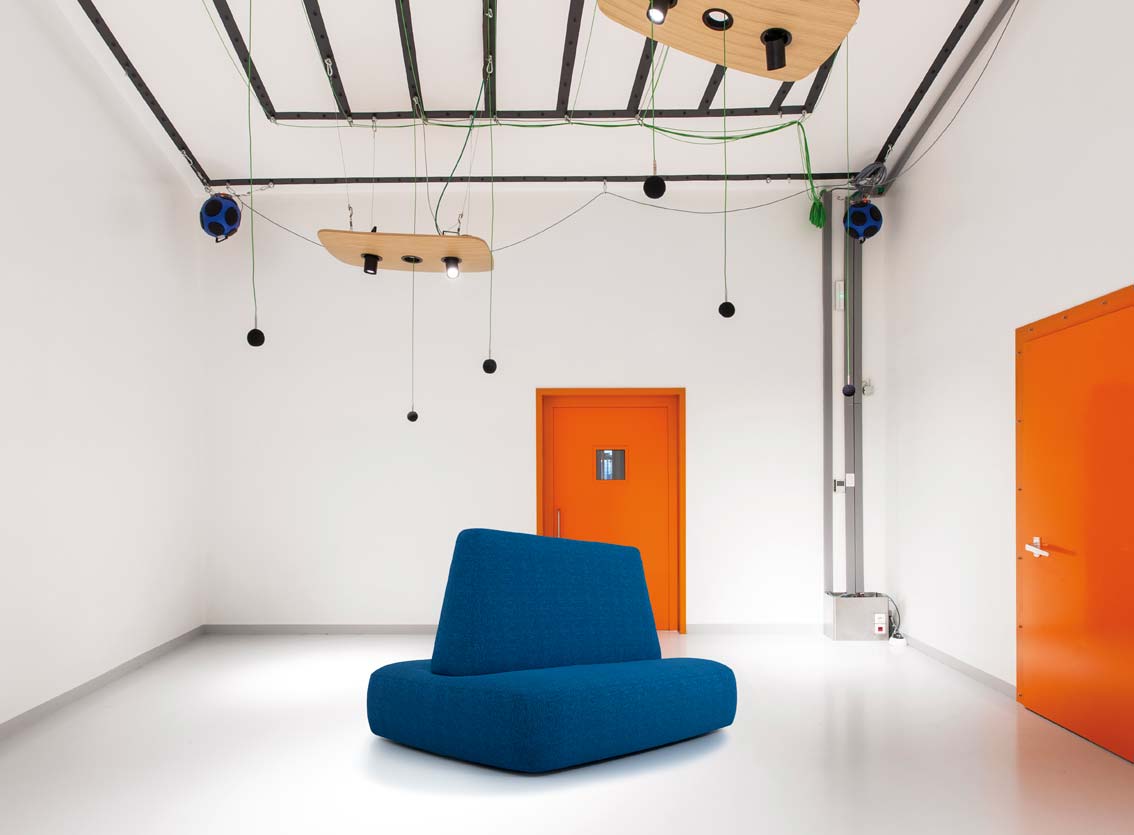
ACOUSTICS ENGINEERED FOR REAL-WORLD NOISE
Most conventional acoustic panels use single-density PET felt, absorbing only mid-to-high frequencies (1000-4000 Hz). They reduce echo but can’t control low-frequency noise from traffic, HVAC systems, crowd density, or the ambient hum of Indian urban life (125-500 Hz).
Caimi Acoustics, an Italian leader in acoustic innovation, developed Snowsound® multi-density technology specifically to address this gap.
How It Works:
-
Outer low-density layers absorb and diffuse high frequencies
-
Inner high-density layers trap low and mid frequencies, preventing resonance
The Result: True broadband acoustic response across 125-4000 Hz.
Unlike conventional PET boards, these panels achieve Class A absorption (αw up to 1.0), and are 100% recyclable, fire-rated, and dimensionally stable. A perfect use case would be Indian workspaces or restaurants in public areas; these panels would dramatically reduce reverberation, speech overlap, and cognitive fatigue, all without disrupting visual design.

They also have Snowsound® Acoustic Fabrics to complement the panels. These aren’t decorative drapes. They are engineered textiles that absorb sound across multiple frequencies because of their layered fibres:
-
The outer weave diffuses incoming sound waves
-
The internal fibre matrix absorbs speech-critical frequencies
-
The backing layer prevents reflection
With αw values up to 0.9, they significantly reduce reverberation while maintaining transparency and light diffusion.
A great use case would be hotels, meeting rooms, and open-plan homes. Fire-rated, antistatic, washable, and recyclable, the Snowsound® Acoustic Fabrics align aesthetic appeal with environmental responsibility.
DESIGNING FOR DECIBELS
Not all noise is equal. Different environments and spaces require different acoustic solutions based on the frequency and level of noise they need to moderate.
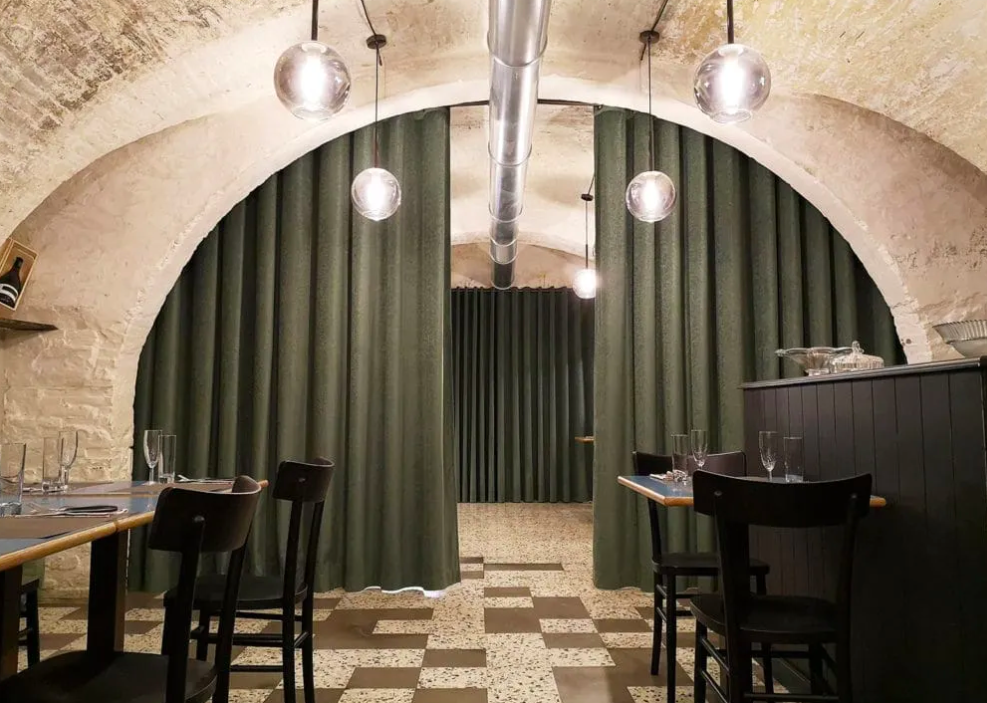
1.RESTAURANTS & HOSPITALITY (Target: 60-70 dB)
The Challenge: High guest density, hard surfaces (marble, glass), open kitchens, and overlapping conversations create 75-85 dB environments where diners shout to be heard. Extended reverberation times lead to shorter guest stays, more service errors, and reviews citing “too loud to enjoy the meal.”
Caimi Solutions:
-
Snowsound Panels: Installed as wall features or ceiling baffles to absorb mid-to-low frequencies from crowd chatter and kitchen noise
-
Snowsound Acoustic Curtains: Room dividers that reduce sound transmission between dining zones while maintaining visual openness
-
Acoustic Lighting: Pendant fixtures that combine illumination with sound absorption, eliminating the “industrial fix” aesthetic
Real Impact: Over 3,000 restaurants globally use Snowsound systems. Results include extended guest stays (when people can converse, they linger), fewer negative reviews about noise, and reduced staff errors due to clearer communication.
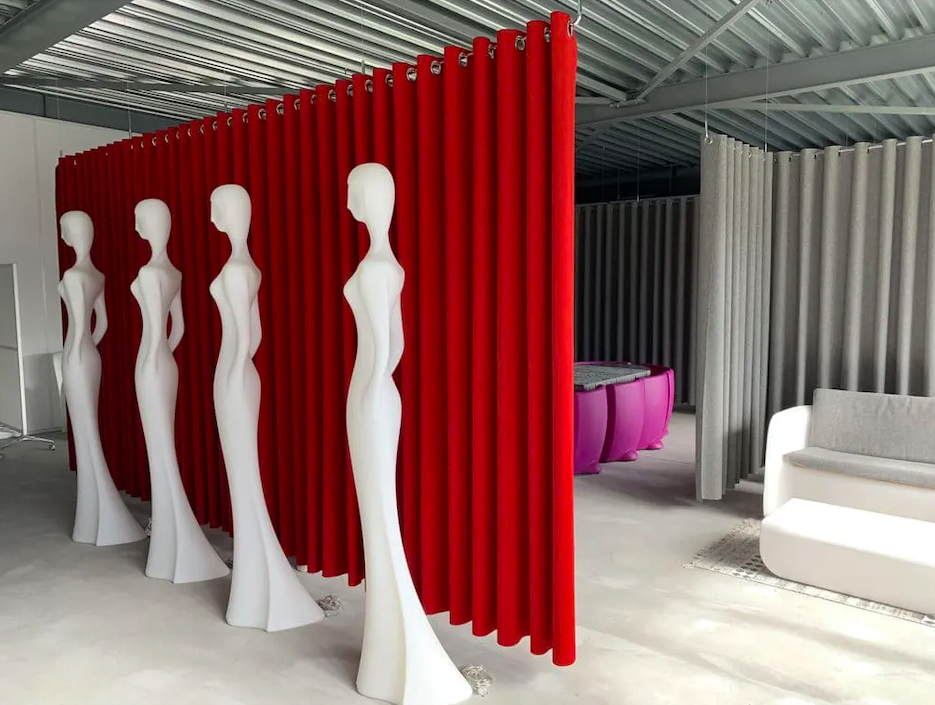
2. RETAIL ENVIRONMENTS (Target: 65-75 dB)
The Challenge: High footfall, transactional noise, ambient music, and reflective display surfaces create fatiguing soundscapes that drive customers out faster.
Caimi Solutions:
-
Freestanding Acoustic Panels: Mobile solutions that can be reconfigured as store layouts change seasonally
-
Wall-Integrated Systems: Snowsound panels disguised as decorative wall features that maintain brand aesthetics
-
Ceiling Baffles: Suspended elements that control overhead reverberation without blocking sightlines
“Caimi doesn’t just correct sound. They fundamentally improve how restaurants, hotels, offices, and homes are experienced. Their solutions integrate so seamlessly that people feel the difference before they understand why. All this while looking elegant and unassuming.”
Juhi Sakhuja, Head of Curation, Beyond & More

3. OPEN-PLAN OFFICES (Target: 50-60 dB)
The Challenge: Density, phone calls, collaborative work, and equipment produce sustained 70-80 dB levels that destroy focus and increase stress.
Caimi Solutions:
-
Desk Screens: Low-profile acoustic barriers that provide speech privacy without creating visual isolation
-
Meeting Pod Solutions: Integrated acoustic furniture systems that create impromptu collaboration zones
-
Ceiling Clouds: Suspended panels that target problematic reflection points while maintaining open-plan aesthetics
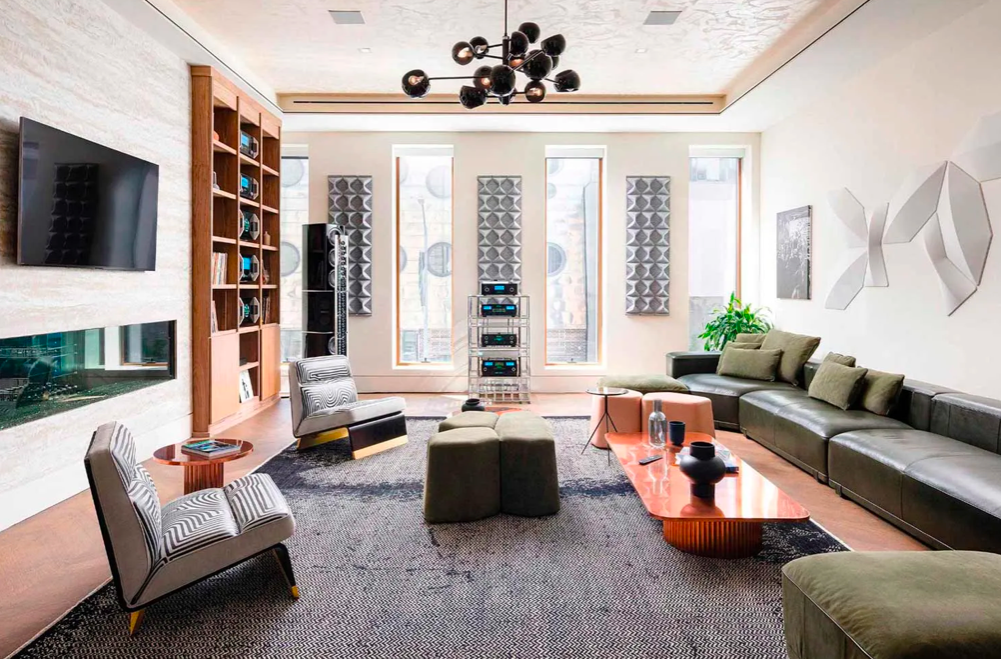
4. HOMES (Target: 40-50 dB)
The Challenge: Minimalist design with hard flooring, bare walls, and open plans creates echo chambers where every sound amplifies.
Caimi Solutions:
-
Snowsound Acoustic Fabrics: Curtains and wall coverings that absorb sound while maintaining light and warmth
-
Decorative Panels: Wall-mounted acoustic art featuring designs by Alessandro Mendini, Gio Ponti, and Gillo Dorfles
-
Acoustic Furniture: Upholstered pieces that combine seating comfort with sound absorption
THE SCIENCE BEHIND THIS SILENCE
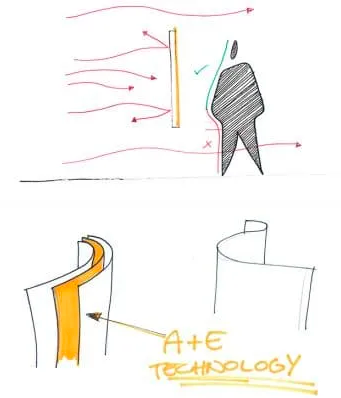
Behind every Snowsound product stands Caimi’s A+E (Architecture + Engineering) technology—a multidisciplinary research hub where acousticians, material scientists, physicists, and designers collaborate to explore how sound interacts with materials and people.
The lab conducts research in:
-
Sound absorption across variable frequency ranges
-
Material behaviour under environmental stress
-
Psychoacoustics: How humans emotionally perceive comfort in sound
-
Integration of acoustics with lighting and architecture
A+E is a patented technology that makes it possible to combine Snowsound acoustic correction with radio frequency reduction through the coupling of a Snowsound textile and a pure silver metallised technopolymer fabric.
Collaborations with renowned designers like Michele De Lucchi, Mario Trimarchi, and (a+b) Dominoni Quaquaro ensure every product merges technical precision with Italian artistry.
Recently honoured with the Compasso d’Oro—one of design’s most prestigious awards—Caimi demonstrates that technical excellence and aesthetic sophistication aren’t opposing forces.
PROUD PARTNERS
Caimi is solving spatial problems, not just aesthetics.
- Their acoustic correction elements (panels, curtains, lighting fixtures, upholstered furniture, wall coverings) are designed as furniture systems that can be installed quickly without structural modifications.
- They can be reconfigured as spaces evolve.
- They’re certified for hygiene and durability in demanding commercial environments.
- And critically, they’re supported by Caimi OpenLab: 7 dedicated research laboratories studying sound behaviour, human perception, and acoustic technology.
At Beyond & More, we curate partners who understand that furniture and spatial design are inseparable. Caimi Brevetti exemplifies this philosophy: their acoustic solutions don’t just correct sound, they fundamentally improve how spaces are experienced.
If you’re designing interiors where conversation, comfort, and experiences matter, we can help you connect to the best acoustic solutions the industry has to offer.