
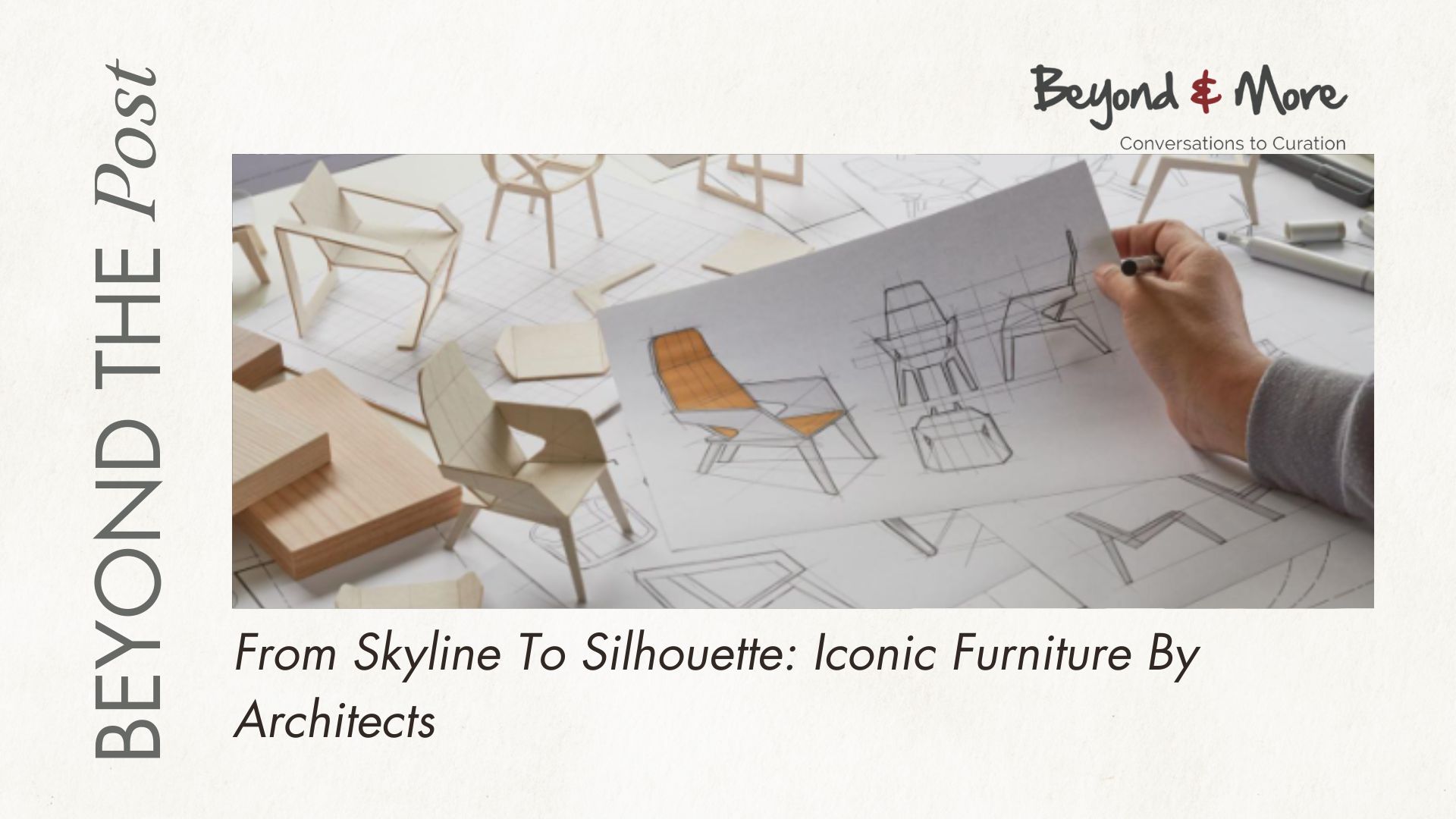
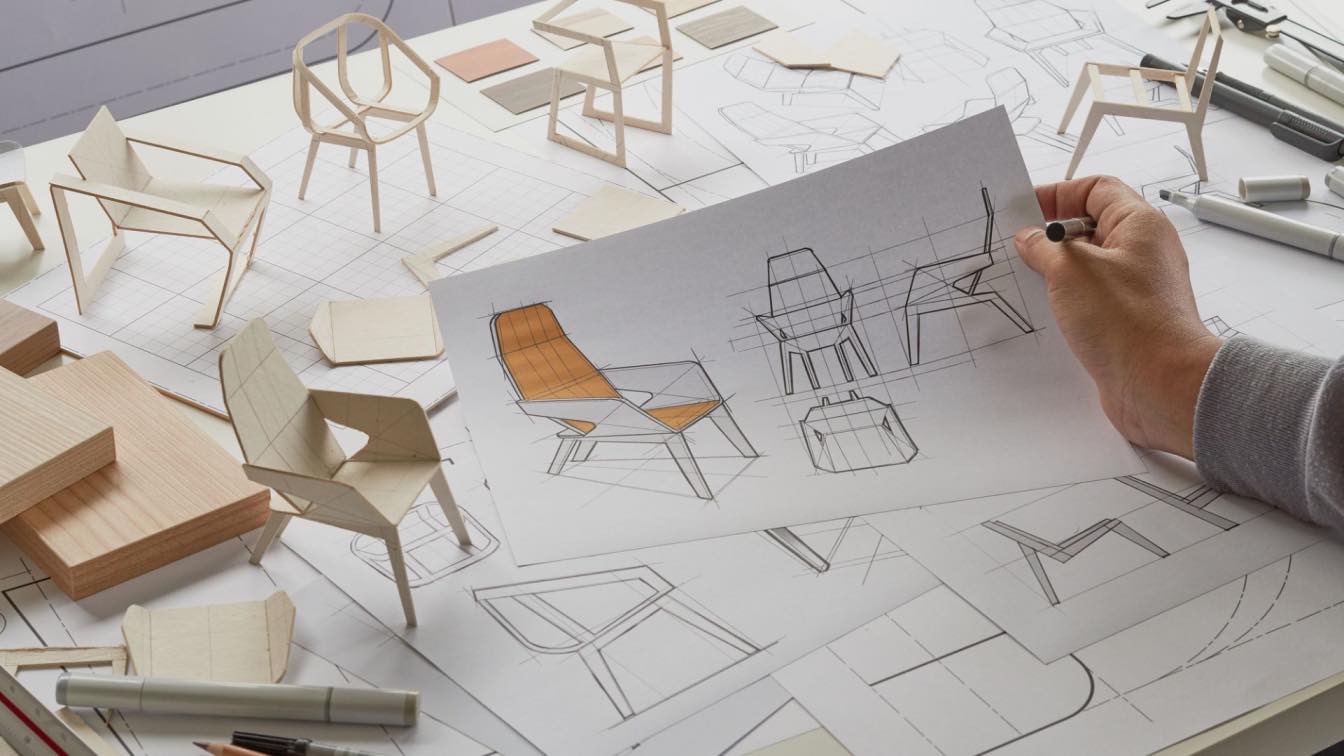
What if you had to map out the blueprint of a chair? Look at it as a monument in miniature, detailing the curves, cantilevers, and even the support structure that makes for its facade?
We imagine this is what it’s like to be inside the mind of the architect who’s designing a piece of furniture. They carry with them the language of geometry, space, tension, and proportion, and all the microcosms of their ethos.
No wonder the results are rarely just functional. In many cases, architect-designed chairs become icons in their own right and you see silhouettes inspired by skylines.
IN THIS ISSUE:
1. THE ORIGINS OF ARCHITECTURAL FURNITURE
2. BEAMS THAT BIND BUILDING & SEATS
3. 6 ICONIC CHAIRS SEATED IN STRUCTURE
4. THE GRAVITY OF EVERYDAY
THE ORIGINS OF ARCHITECTURAL FURNITURE
The crossover between architecture and furniture design is not new. Architects have long sketched chairs and stools alongside buildings.
Frank Lloyd Wright’s Prairie style homes included built-in seats.
Charles and Ray Eames’ experimental plywood pieces blurred disciplines.
And Le Corbusier famously designed rugs, lamps, and lounge chairs to complement his villas.
But the modern resurgence of architects designing furniture speaks to something deeper: the desire to bring their structural thinking into spaces that are intimate, tactile, and human-scaled. It’s a conscious contraction of scale; ambitious ideas rendered into objects that obey gravity, embrace ergonomics, and invite daily use.
“Architect-designed furniture resonates with a very intentional buyer… someone who values structure, story, and legacy. These aren’t just chairs; they’re design philosophies made tangible. There’s tension, sculptural precision, tactile artistry, and a sense of control that feels fluid within the frame.”
Juhi Sakhuja, Head Of Curation, Beyond & More
BEAMS THAT BIND BUILDING & SEATS
Architecture and furniture share more than materials. They share a mindset and a commitment to structure, balance, and form to shape how we live, move, and feel within a space. Let’s look at the other bridges between buildings and furniture:
- STRUCTURAL RHYTHM
Be it a skyscraper’s steel frame or a chair’s cantilevered leg, both require an internal logic that balances load with lightness. - MATERIAL POETRY
Concrete and timber find echoes in moulded plywood, anodised metal, or polished stone. Each surface you see speaks of place and process. - HUMAN SCALE
Buildings house people; chairs support them. The intimacy of seating invites architects to test spatial ideas in a tactile dialogue. - CONTROLLED CHOREOGRAPHY
They both begin with a line, a volume, a vision. Both must resolve the tension between function and beauty. And both rely on the choreography of proportion, light, and weight.
6 ICONIC CHAIRS SEATED IN STRUCTURE
Unlike buildings, chairs engage the body directly. They must feel as good as they look, balance form and function, and make statements in far smaller footprints.
For many architects, this is a challenge worth exploring, a chance to test how their principles of structure, materiality, and proportion translate to a scale of everyday use. The end results are pieces of furniture that reflect their signature aesthetic:
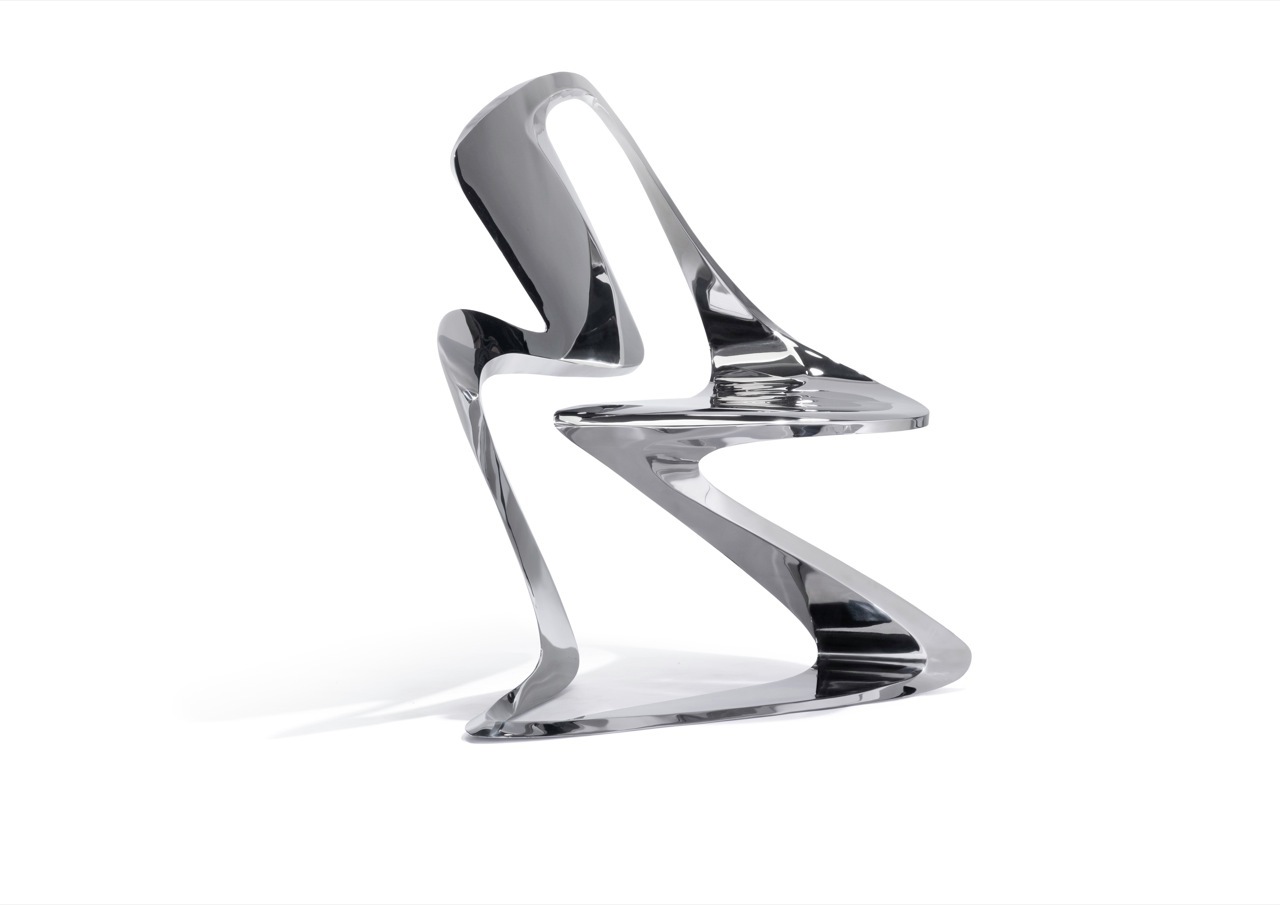
Z Chair by Zaha Hadid | Brand: Sawaya & Moroni
The chair features Hadid’s signature sweeping lines and futuristic asymmetry. The continuous Z-shape challenges static balance, echoing her building facades that appear to be in motion.
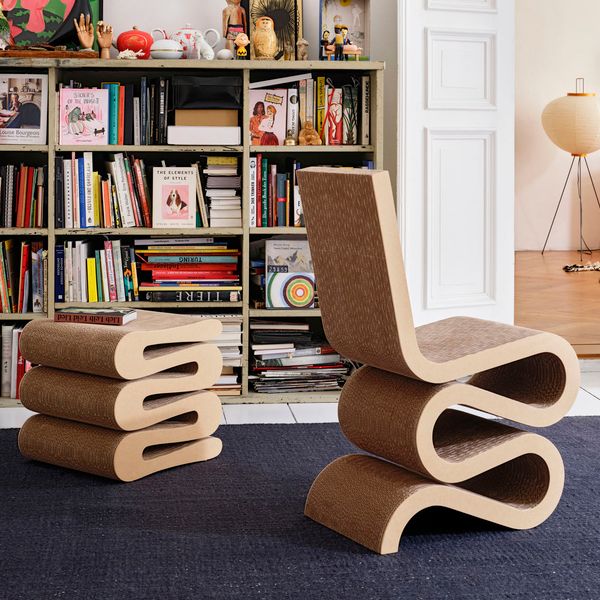
Wiggle Side Chair by Frank Gehry | Brand: Vitra
A piece where innovation and playful form collide, the chair is made from corrugated cardboard and reflects Gehry’s signature approach to unexpected materials. Its bold curves and layered form are unmistakably Gehry, resembling his architectural works like the Guggenheim Bilbao in miniature.
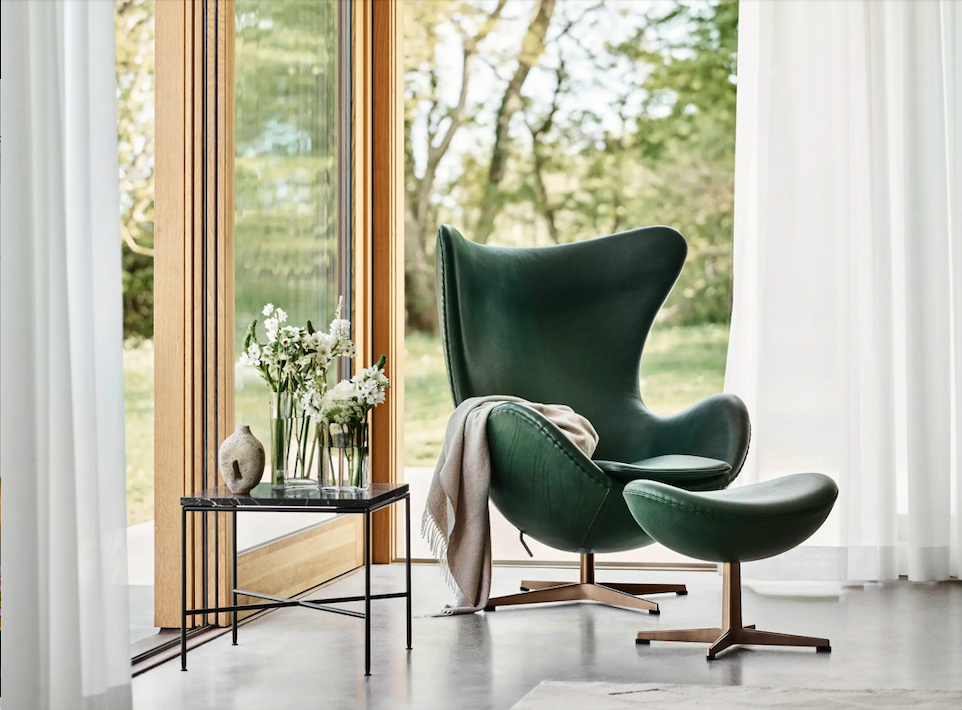
Egg Chair by Arne Jacobsen | Brand: Fritz Hansen
Designed for the SAS Royal Hotel in Copenhagen, the Egg Chair mirrors Jacobsen’s architectural approach to holistic design. Its cocooning form creates a sculptural sense of privacy, almost like a safe pod within a chair.
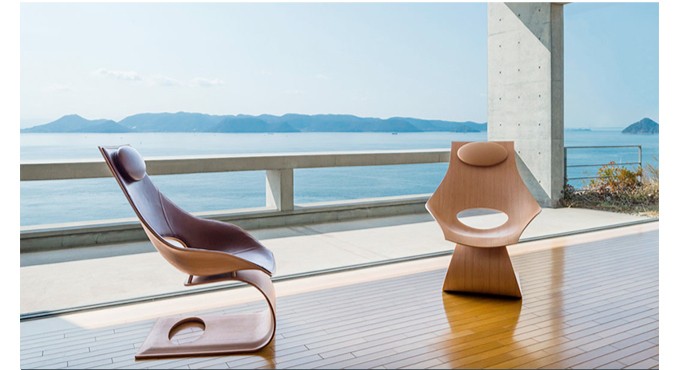
Dream Chair by Tadao Ando | Brand: Carl Hansen & Søn
The chair showcases Ando’s mastery over form and light. It invites stillness andcontemplation, much like his architecture, blending soft curves with structural poise.
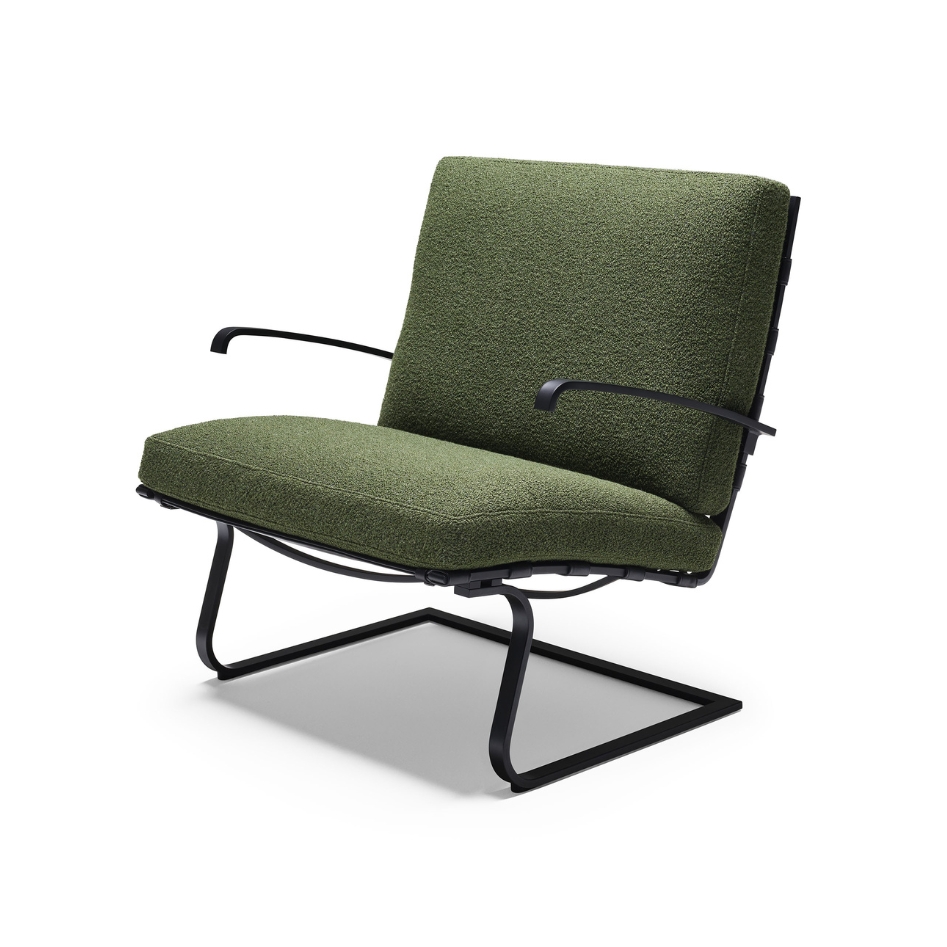
Tugendhat Chair by Ludwig Mies van der Rohe | Brand: Knoll
Originally created for the Tugendhat House in Brno, this chair embodies Mies van der Rohe’s “less is more” philosophy. The exposed steel frame and leather seat form a precise balance between elegance and restraint.
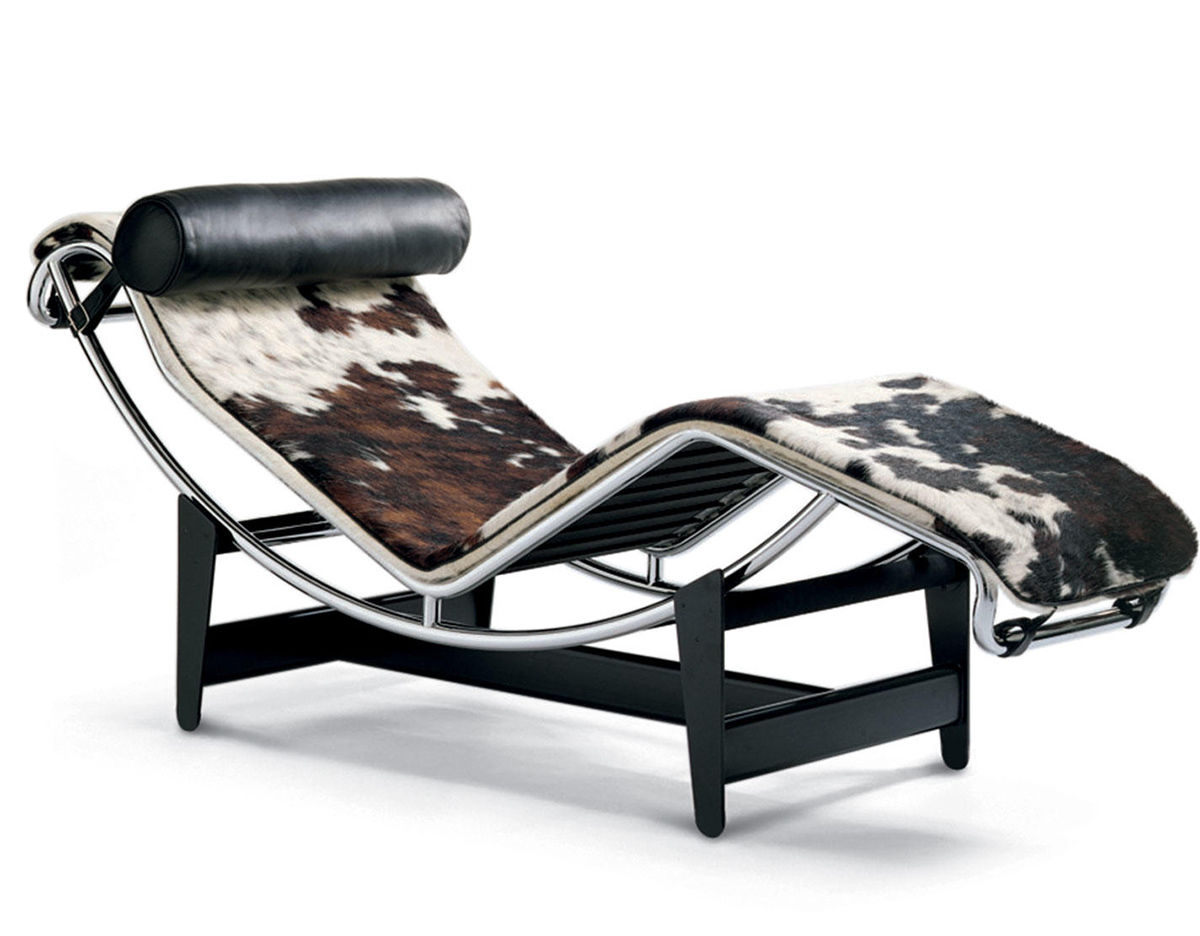
LC4 Chaise Lounge by Le Corbusier | Brand: Cassina
Known as the “relaxing machine,” the LC4 is ergonomically engineered for rest. Its industrial yet sensual design mirrors Le Corbusier’s vision of modern living as a harmonious blend of body and space.
“These pieces are often produced by heritage brands that understand the weight of architectural legacy. In fact, there’s a growing market for such design-led furniture in India, especially among clients who view their space as a long-term investment in taste, culture, and collectable value.”
Sanjay Pareek, Co-FounderBeyond & More
Chairs designed by architects aren’t just accents; they’re anchor points in a room’s narrative. They’re chairs that carry gravity in more ways than one. Whether you’re an admirer of architectural icons or a designer seeking a statement piece, these chairs offer both provenance and presence.
At Beyond&More, we see the compression of vision in such furniture… foundations shrunk to scale, philosophies made personal. If you’re looking to bring architecture into your home, we can help you curate living spaces thoughtfully and beautifully.